
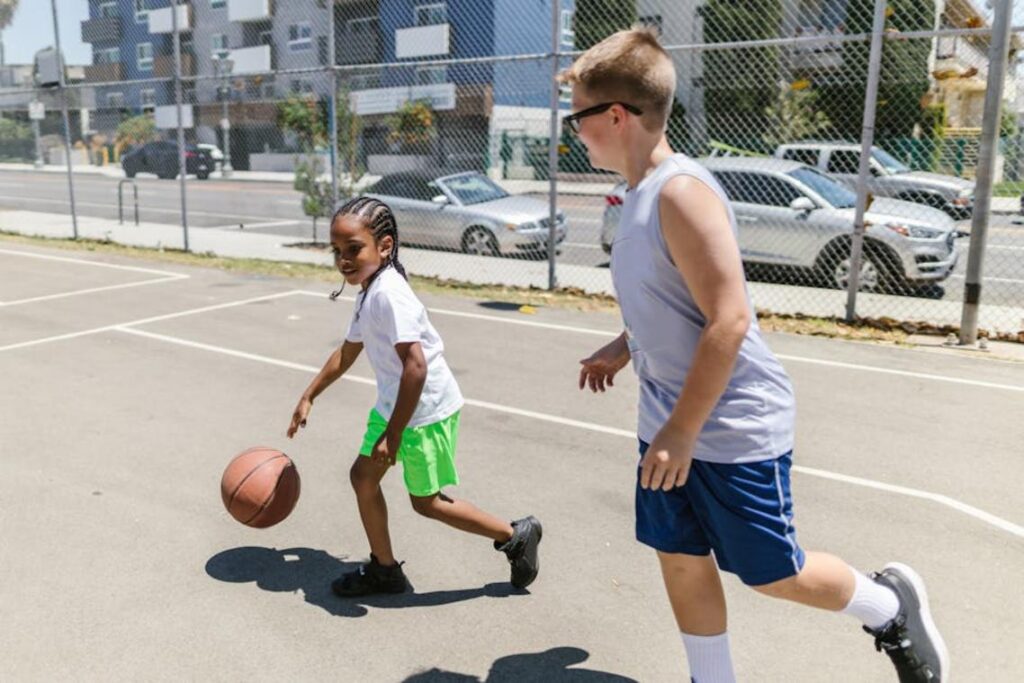
Basketball is evolving faster than ever, and staying ahead means understanding more than just last night’s final score. Whether you’re searching for smarter pro game strategies, deeper Fare League analysis, or practical ways to sharpen your skills, this article delivers exactly what you came for. We break down today’s hottest sports topics, evaluate real team performance trends, and translate elite-level tactics into actionable insights you can use on the court.
If you’re a player, you’ll find practical takeaways, including detailed ball handling drills that build control, speed, and confidence under pressure. If you’re a fan or analyst, you’ll gain a clearer perspective on what’s driving wins, losses, and breakout performances across the league.
Our insights are grounded in careful game study, performance breakdowns, and ongoing analysis of competitive play. The goal is simple: give you clear, accurate, and useful basketball knowledge that helps you think sharper, play better, and understand the game at a deeper level.
Master the Rock: Your Ultimate Guide to Unshakable Ball Control
You know the feeling: defender in your jersey, crowd buzzing, and suddenly the ball slips away. Frustrating, right? Weak control is the NUMBER ONE reason players stall—turnovers pile up, confidence drops, opportunities vanish.
Here’s the fix.
Start with low, pound dribbles—3 sets of 30 seconds each hand. Then add crossover progressions, focusing on quick, tight movements below the knee. Finish with controlled chaos: cone zig-zags at game speed.
These ball handling drills build touch, speed, and poise under pressure.
Stay LOW. Keep your EYES UP. Practice DAILY.
Follow this roadmap, and watch your handle transform immediately.
Building Your Foundation: Stationary Ball Handling Drills
If movement is the showtime dunk, stationary work is the weight room. It’s less flashy—but it builds the control, grip strength, and muscle memory (your body’s ability to perform skills automatically) that separate smooth handlers from sloppy ones. Think of stationary ball handling drills as learning to play scales before performing a solo.
Some players argue that game-speed movement matters more than standing still. True—basketball is dynamic. But without fingertip control and hand strength, adding movement is like building a house on sand. Foundation first, flair later.
1. Ball Slaps & Fingertip Taps
Start by slapping the ball firmly back and forth between hands. Then transition to rapid fingertip taps, keeping palms off the ball. Slaps build hand activation; taps develop sensitivity and control. A vs B: Palms create dependence, while fingertips create precision. (And precision wins games.)
2. Around the World Series
Wrap the ball around your head, then waist, then both legs. Progress to a Figure 8 weave through your legs. Eyes up the entire time—court awareness starts here. Looking down trains hesitation; looking up trains confidence.
3. Stationary Crossovers (Low & Wide)
Alternate between low, powerful dribbles (below the knee) and wide, sweeping crossovers. Low builds quickness and protection; wide builds range and rhythm. Tight vs loose control isn’t a style choice—it’s situational mastery.
Master these, and movement becomes easier. Skip them, and every step forward exposes what you didn’t build.
Adding Movement: Dribbling Drills on the Go
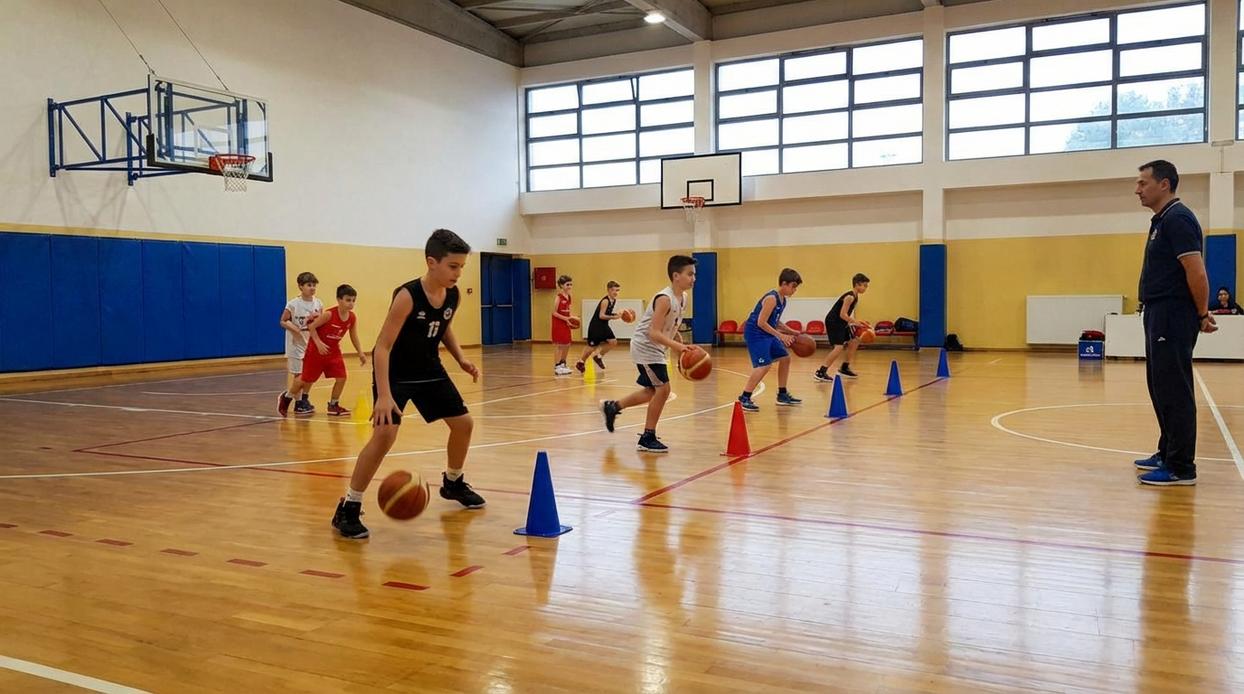
Static control is important—but games aren’t played standing still. Defenders close out, help rotates, and space disappears fast. This is where movement-based ball handling drills separate confident players from rattled ones.
Some coaches argue that players should master stationary control before adding speed. That’s fair. A weak foundation collapses under pressure. But waiting too long to add motion creates another problem: players who look great in workouts and struggle in games (we’ve all seen that player). Controlled chaos is part of development.
Drill 1 – Zig-Zag Dribbling
Set up 5–7 cones in a zig-zag pattern from baseline to half court. Attack each cone with a different move: crossover at the first, between-the-legs at the second, behind-the-back at the third. Repeat the sequence down the line.
Focus on changing pace and direction. A hesitation (a brief pause to freeze a defender) before exploding to the next cone makes the drill game-realistic. Keep your shoulders low and eyes up.
Pro tip: Don’t rush the move—sell it. The shift in speed is what creates separation.
Drill 2 – Full-Court Sprints (Controlled Speed Dribbling)
Dribble full speed down the court with your right hand, finish under control, then return with your left. Keep the ball at waist level and slightly in front of your lead foot.
Critics say full-speed dribbling builds bad habits. It can—if control is ignored. The goal isn’t reckless speed; it’s controlled speed. Think of it like driving fast but with both hands on the wheel.
Drill 3 – Retreat Dribbling & Kill Dribble
Retreat dribbling means moving backward while maintaining control to create space from pressure. After two to three retreat dribbles, execute a hard kill dribble—a forceful pound dribble that stops your momentum—then explode in a new direction.
This simulates real defensive pressure and builds poise. Pair this work with strong mechanics from the shooting form fundamentals step by step guide to stay dangerous once you create space.
Movement plus control—that’s the difference between practice-ready and game-ready.
Advanced Techniques: Two-Ball and Reactive Drills
If basic dribbling builds control, advanced overload drills build processing speed. Overload training means adding extra stimuli so the brain and body must work harder than normal. In basketball terms, that translates to quicker reactions and tighter handles when the game slows back down (and it will feel slower).
Some coaches argue that flashy overload drills look cool but don’t translate to real play. That’s fair—random tricks won’t help. However, structured ball handling drills that challenge coordination directly improve neural efficiency, or how quickly your brain sends clean signals to your muscles (Schmidt & Lee, Motor Control and Learning). That’s the difference between reacting and hesitating.
Drill 1 – Two-Ball Stationary Dribbles
Start with simultaneous pounds: both balls dribbled hard at the same time. This builds equal force production in each hand.
Next, move to alternating pounds, bouncing one ball as the other rises. Now each hand operates independently—like patting your head while rubbing your stomach, except faster.
Finally, try windshield wipers, sliding both balls side-to-side in unison. This develops lateral control crucial for in-game shifts and crossovers.
Together, these sequences force bilateral coordination (both sides working efficiently), reducing your “weak-hand tax.” Pro tip: Keep your eyes up the entire time—staring down defeats the purpose.
Drill 2 – The Tennis Ball Toss Drill
Dribble a basketball with one hand while tossing and catching a tennis ball with the other. This trains peripheral vision—your ability to process what’s happening outside your direct line of sight (American Optometric Association).
In games, defenders swipe, teammates cut, and passing lanes open unexpectedly. This drill sharpens reactive hand-eye coordination so you’re not surprised. Think less panic, more poise—like a point guard in crunch time.
From Drills to Dominance: Integrating Control into Your Game
By now, you’ve progressed from stationary control to advanced reactive work—meaning you have a complete toolkit. Yet tools only matter if you use them consistently. After all, turnovers and shaky confidence don’t disappear overnight; consistency is the cure.
The truth is simple: disciplined ball handling drills train instinct. For example, tight cone dribbles translate directly to navigating double teams. Likewise, reactive partner calls sharpen split-second decisions.
So here’s a practical plan:
| Section | Drill Focus | Time |
|—|—|—|
| Control | Stationary pounds | 5 min |
| Movement | Cone changes | 5 min |
| Reaction | Partner cues | 5 min |
Start today—15 focused minutes turns practice into performance.
Take Your Game to the Next Level
You came here looking for real ways to sharpen your skills, improve team performance, and understand what separates average players from game-changers. Now you’ve seen how strategy, consistency, and the right ball handling drills can completely transform your confidence and control on the court.
The biggest frustration for most players isn’t effort — it’s not knowing what to focus on. Wasted practice time. Sloppy turnovers. Missed opportunities in clutch moments. That’s what holds athletes back.
The difference? Structured training, smarter analysis, and drills that translate directly into game performance.
If you’re serious about tightening your handles, improving decision-making, and playing with more authority, don’t stop here. Dive deeper into advanced breakdowns, apply these ball handling drills consistently, and start training with purpose.
Thousands of players trust our insights to elevate their game. Now it’s your turn. Get on the court today, commit to the work, and turn those weaknesses into strengths.
 Director of Game Theory
John specializes in the mathematical precision of pro game strategies, ensuring every tactical breakdown at Sffare is backed by rigorous performance data and advanced statistical modeling that uncovers hidden patterns in team efficiency. By bridging the gap between raw numbers and on-court reality, he provides a roadmap for high-stakes decision-making that allows coaching staffs and analysts to predict game-changing momentum shifts before they even occur on the hardwood. His expertise extends to the nuances of salary cap management and roster construction, providing Sffare readers with a comprehensive look at how front-office decisions directly influence the final score of the championship game.
Director of Game Theory
John specializes in the mathematical precision of pro game strategies, ensuring every tactical breakdown at Sffare is backed by rigorous performance data and advanced statistical modeling that uncovers hidden patterns in team efficiency. By bridging the gap between raw numbers and on-court reality, he provides a roadmap for high-stakes decision-making that allows coaching staffs and analysts to predict game-changing momentum shifts before they even occur on the hardwood. His expertise extends to the nuances of salary cap management and roster construction, providing Sffare readers with a comprehensive look at how front-office decisions directly influence the final score of the championship game.