
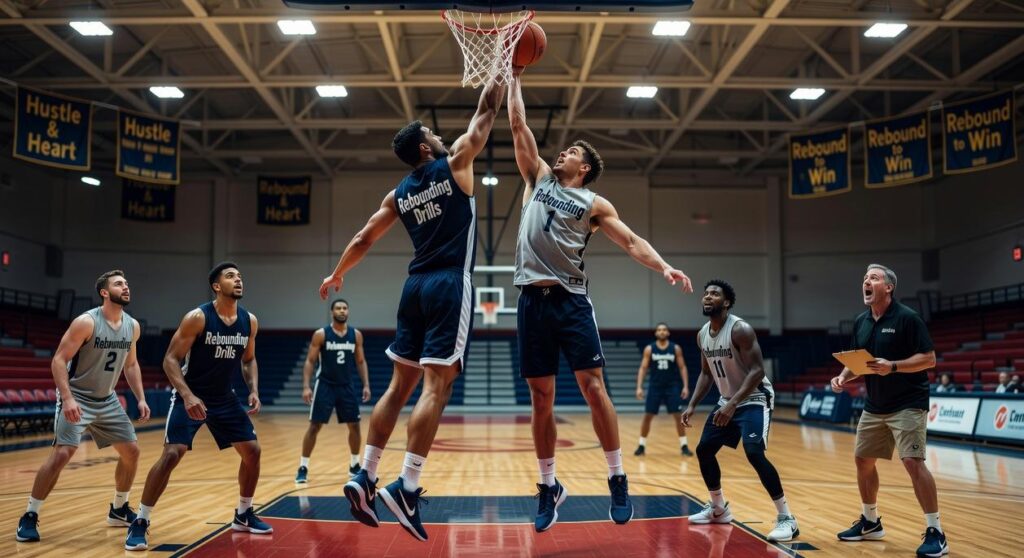
Losing a game on a last-second putback is one of basketball’s most frustrating experiences. It exposes a hard truth: rebounding wins and loses games. Too many players assume controlling the glass is about height or luck, but it’s actually built on positioning, timing, toughness, and disciplined execution. This guide delivers a clear, actionable blueprint designed to sharpen your edge with proven rebounding practice techniques you can apply immediately. We break down the footwork, mindset, and drills that turn average players into relentless board-dominating forces—so you can secure extra possessions, shift momentum, and ultimately decide the outcome when it matters most.
The Foundation: Forging a Relentless Rebounding Mindset
The rebound begins in silence—the split second the ball leaves the shooter’s fingertips, spinning backward through bright arena lights. ASSUME EVERY SHOT IS A MISS. Don’t admire the arc. Hear the rim’s metallic CLANG in your mind before it happens. Track the angle, the rotation, the force. A shot from the wing? Expect it to ricochet long to the weak side.
Develop true ball-hawk instincts. Watch how the seams blur. A soft, high release often dies near the front rim; a flat missile kicks hard and far. Smell the varnished hardwood, feel sneakers squeak as bodies collide.
• Initiate first contact—low, wide stance, forearm firm, hips anchored.
This is CONTROLLED AGGRESSION. Legal. Relentless. Physical.
The Pursuit Principle is simple: half of rebounds belong to effort. Chase every miss like it’s Game 7. Drill it through rebounding practice techniques until effort becomes reflex. No drifting. No spectating. Just hunger.
Winning the War Before the Jump: Mastering the Box Out
Rebounding isn’t about vertical leap; it’s about leverage. While highlight reels glorify soaring put-backs, championships are often secured by players who master positioning first. In other words, you win the war before you ever leave the floor.
Step-by-Step Breakdown
First, Locate Your Opponent. As soon as the shot goes up, briefly shift your eyes from the ball to your check. Ball-watching is how size disadvantages turn into second-chance points.
Next, Initiate Contact. Step in, drop your hips, and create a wide base. Lower center of gravity equals greater balance (physics always wins).
Then, The Reverse Pivot & Seal. Pivot on your inside foot, place your back into the opponent’s chest, and drive them away from the rim using your legs. Strong seals beat taller players surprisingly often.
Finally, Explode to the Ball. Release, jump aggressively, and secure it with two hands—chin it tight to eliminate guard swipes.
Competitive Edge Most Teams Miss
Many programs teach jumping drills but neglect controlled contact reps. Integrating rebounding practice techniques that emphasize hip positioning and timing closes that gap.
| Phase | Key Focus | Common Mistake |
|——-|———–|—————-|
| Locate | Awareness | Ball-watching |
| Contact | Low base | Standing tall |
| Seal | Reverse pivot | No leverage |
| Explode | Two hands | Tipping ball |
Ultimately, elite rebounders create space first—athleticism is just the bonus.
Practice-Proven Drills to Build Rebounding Instincts
Great rebounders aren’t born—they’re trained. Research from performance tracking at the NBA and NCAA levels shows that second-chance points can account for 12–18% of total scoring in competitive games (NCAA statistics database). In other words, winning the glass isn’t optional—it’s measurable impact.
Drill #1: The “War” Drill
This 3-on-3 paint battle forces players to box out under pressure. A coach shoots from the perimeter, and the defense must secure the rebound before transitioning to offense. Studies on constraint-based training show that game-like chaos improves decision speed and physical engagement. The contact, timing, and urgency here mirror real possessions (and yes, it gets chippy—that’s the point).
Drill #2: Tip Drills
Continuous tips off the backboard sharpen hand-eye coordination and reaction timing. Sports science research highlights repetitive touch training as critical for neuromuscular adaptation. Dominant hand, non-dominant hand, alternating—each variation strengthens control in traffic. Over time, this builds soft hands and quicker second jumps.
Drill #3: Mikan Rebounding Variation
By grabbing the ball aggressively with two hands before finishing, players reinforce high-point control. Two-hand rebounds reduce turnover rates compared to one-hand snatches, especially in contested areas. This variation builds secure habits—grab first, score second.
Drill #4: Reaction Tosses
Unpredictable caroms train anticipation. Reaction-based drills improve spatial awareness and positioning, key factors in rebound percentage metrics.
Together, these rebounding practice techniques translate directly to game production. Pair them with fundamentals like passing accuracy drills for better team play to turn defensive stops into efficient offense. Consistency in these drills turns effort into evidence on the stat sheet.
Building the Physical Tools for Dominance on the Boards
Technique matters. However, strength is what turns good positioning into actual possession. I’ll be honest—there’s still debate about how much raw athleticism outweighs timing and instinct. Some coaches argue rebounding is mostly effort and anticipation. They’re not wrong. Yet when two players read the ball equally well, the stronger, more explosive athlete usually wins (physics tends to have the final say).
To build that edge, focus on three key areas:
-
Explosive Lower Body Power
Your vertical leap sets your ceiling—literally. Plyometrics like box jumps, depth jumps, and squat jumps train fast-twitch muscle fibers (the fibers responsible for quick, powerful movements). Research shows plyometric training can significantly improve jump performance (Markovic, 2007). Still, results vary, so track progress rather than guessing. -
Core Strength and Stability
Next, a strong core helps you absorb contact during a box out. Planks, medicine ball slams, and deadlifts create trunk stability (your body’s ability to resist unwanted movement). Without it, you’ll get nudged off balance. -
Grip and Hand Strength
Finally, rebounds are often ripped—not caught. Farmer’s walks and plate pinches strengthen your grip so the ball sticks in traffic.
Blend these with rebounding practice techniques, and over time, you’ll notice more second-chance opportunities turning into points.
From Practice Reps to In-Game Results
You wanted to turn effort into production—and now you understand that dominance on the glass comes from discipline, detail, and daily commitment. Games are often lost because of missed box outs, weak positioning, and second-chance points given away. That pain point? It’s fixable.
By locking in on rebounding practice techniques, you transform hustle into a measurable edge. The players who control the boards control the outcome.
Stop hoping rebounds fall your way. Train for them. Apply these strategies in your next session and create the extra possessions that win games. Start today and make your presence on the glass undeniable.
 Founder & Lead Strategist
The visionary behind Sffare, Zyvaris combines deep analytical insights with a lifelong passion for the Fare League to redefine how fans understand the modern game through elite storytelling and tactical precision. His approach involves a meticulous deconstruction of offensive flow and defensive rotations, ensuring that every piece of content published under the Sffare banner provides a masterclass in basketball IQ that empowers both casual viewers and seasoned professionals. Furthermore, he works tirelessly to bridge the gap between historical basketball fundamentals and the modern era's emphasis on high-volume efficiency, creating a unique strategic philosophy that has become the bedrock of the entire Sffare brand.
Founder & Lead Strategist
The visionary behind Sffare, Zyvaris combines deep analytical insights with a lifelong passion for the Fare League to redefine how fans understand the modern game through elite storytelling and tactical precision. His approach involves a meticulous deconstruction of offensive flow and defensive rotations, ensuring that every piece of content published under the Sffare banner provides a masterclass in basketball IQ that empowers both casual viewers and seasoned professionals. Furthermore, he works tirelessly to bridge the gap between historical basketball fundamentals and the modern era's emphasis on high-volume efficiency, creating a unique strategic philosophy that has become the bedrock of the entire Sffare brand.