

Serious players and coaches know that talent alone doesn’t win games—preparation does. If you’re looking to elevate your performance, sharpen team execution, or gain a strategic edge before tip-off, this guide to basketball film study preparation will show you exactly how to do it the right way.
Film study isn’t just about rewatching highlights. It’s about breaking down defensive rotations, identifying offensive tendencies, studying pace changes, and recognizing situational patterns that decide close games. Whether you’re analyzing your own team or scouting an upcoming opponent, structured preparation turns raw footage into actionable strategy.
This article delivers clear, practical insights drawn from in-depth game analysis, performance breakdowns, and proven competitive strategies used at high levels of play. You’ll learn how to structure your sessions, what details matter most, and how to translate observations into on-court results.
If your goal is smarter decisions, tighter execution, and a measurable competitive advantage, you’re in the right place.
The Film Room Edge: How Tape Translates to Triumphs
Hitting a plateau can feel frustrating; however, smarter study beats longer workouts. Solution is disciplined basketball film study preparation. Instead of passively watching highlights, pause, rewind, and tag possessions. For example, if you keep missing corner threes, chart footwork and spacing.
Here’s what I recommend:
- Track decisions in first five seconds.
- Note defensive positioning before score.
- Compare habits to elite guards (playoff composure).
Some argue reps alone build instinct. Yet research shows deliberate practice with feedback accelerates skill acquisition (Ericsson, 1993). So watch purposefully, then practice with intent
Setting the Stage: Your Film Analysis Toolkit
Great analysis starts with the right setup. A smartphone camera works, but stability is NON-NEGOTIABLE. Use a tripod and aim for an elevated, mid-court angle to capture spacing and help-side rotations. That vantage point shows who is early, who is late, and why plays succeed.
Record full games, not just highlight reels. Context matters. A turnover in the fourth quarter tells a different story than a flashy first-quarter dunk. Include scrimmages and focused practice sessions to evaluate decision-making under pressure.
• Create a tagging system by player, play type, or outcome so clips are searchable in seconds.
Approach every session with basketball film study preparation in mind. Decide your focus before pressing play: footwork, defensive rotations, or offensive spacing. FEATURES matter only if they improve performance; organized footage accelerates feedback and builds smarter athletes. Think of it as game tape with a purpose daily.
The Individual Player Breakdown: A Micro-Level Review
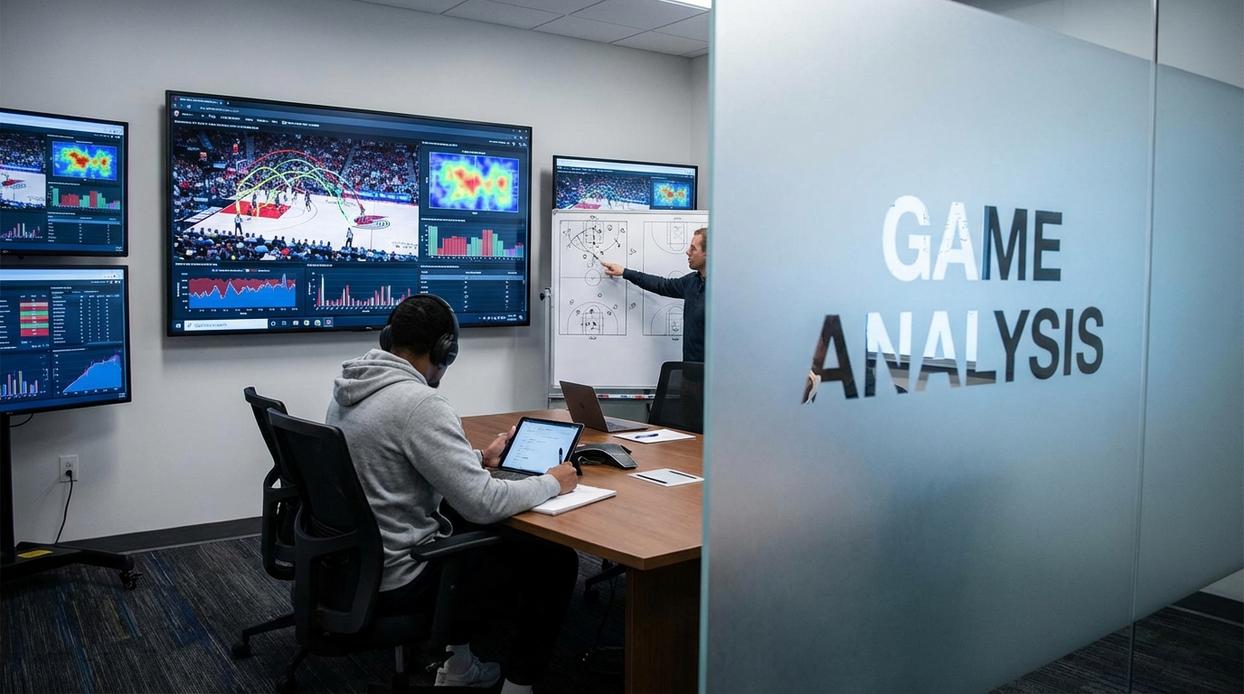
Let’s be honest. Watching your own film can be painful. You remember the bucket you scored, but the tape shows the three lazy possessions no one clapped for. That sting? Good. That’s growth.
Offensive Efficiency
It’s not just about makes and misses. A contested fadeaway with 18 seconds left on the shot clock isn’t “confidence”—it’s a bailout. Ask yourself:
- Was that shot within the offense?
- Were my feet set and balanced?
- Did I rush the catch?
Poor footwork ruins great intentions. If your base is narrow or your shoulders drift, your percentages will dip (and you’ll blame the rim). Balance is boring, but it’s elite.
Defensive Positioning
This is where most players get exposed. Off-ball defense feels invisible, so effort drops. Freeze the tape.
- Are you in proper help-side position?
- Are your closeouts controlled with choppy steps?
- Or are you lunging and getting blown by?
Lunging feels aggressive. It’s actually desperation. Stay disciplined.
Transition Habits
The first three steps after a turnover say everything. Do you sprint back every time—or only when coach is yelling? Do you fill the correct lane on the break, or drift toward the ball like it’s a magnet?
Jogging in transition is a silent stat killer.
Decision-Making Under Pressure
Pause before your pass or shot. What did you see? What did you miss? Film forces honesty. That’s why basketball film study preparation matters. It trains your court vision before the game speeds up.
It’s frustrating. It’s humbling. But detail by detail, it’s how average players become reliable ones.
Team Tactics and Strategy: A Macro-Level View
At the macro level, strategy isn’t about who scored 30. It’s about why those 30 were possible. That’s where many breakdowns stop short. Let’s go deeper.
Offensive Set Execution starts with spacing (how players position themselves to create driving lanes and passing angles). Is the weak-side corner occupied? Are screens set at the correct angle to force defenders over the top instead of slipping under? Great teams don’t just run plays—they flow to second and third options when the first action is denied. Think of the 2014 Spurs: the ball rarely stuck (and neither did defenders).
Some argue talent overrides structure. To a point, sure. But poor spacing shrinks the floor—just ask any isolation-heavy team that stalls in the playoffs.
Defensive Rotations reveal discipline. A rotation is the coordinated shift defenders make after penetration or a skip pass. Are low-man helpers early and loud? Who tags the roller consistently? Late rotations aren’t random; they’re patterns. Track them possession by possession during basketball film study preparation.
Scouting Opponents means identifying repeat behaviors:
- Go-to action after timeouts
- Primary scorer’s preferred spots
- Weak defenders in pick-and-roll coverage
Analytics can sharpen this edge. See how the role of analytics departments in modern franchises influences matchup targeting.
Special Situations often decide close games. Baseline out-of-bounds sets, end-of-quarter two-for-one decisions, and press break alignments separate prepared teams from reactive ones. (Yes, that sideline misdirection you ignored in the second quarter matters.)
The competitive advantage? Connecting patterns across games—not just possessions. That’s how you see what others miss.
From Analysis to Action: Translating Film to Drills
Great coaching starts by asking a simple question: why is this happening? If your team struggles with defensive rebounds, is it poor positioning, weak box-outs, or just late reactions? Film exposes the root cause. That’s the difference between guessing and knowing.
This is where basketball film study preparation becomes powerful. Instead of running random drills, you design solutions tied directly to what shows up on screen.
- Identify the breakdown (missed closeout, lazy pass, no weak-side help)
- Design a matching drill (3-on-3 shell for closeouts, pressure passing warm-ups, rebounding combat drills)
- Reinforce with proof (show improvement clips after practice)
For example, if film reveals wild closeouts, run controlled 3-on-3 shell emphasizing high hands and short choppy steps. If passing looks sloppy, begin practice with five minutes of sharp, game-speed passing under defensive pressure.
The feedback loop matters. Show the mistake. Drill the correction. Then show the improvement. Players gain confidence when they see progress (and buy into the process faster).
Making film study a winning habit starts with a choice: random replays or structured review. Option A is passive watching—you relive highlights, nod at mistakes, and move on. Option B is basketball film study preparation—pausing, tagging possessions, tracking turnovers, defensive rotations, and shot quality. The difference is clarity. Instead of guessing why improvement stalls, you see patterns in black and white. Moreover, structured sessions turn emotion into evidence. Schedule 30 minutes this week, compare one focus area against last game, and adjust drills accordingly. Over time, data-driven habits beat vibes, every single time. Consistency compounds like interest in playoff runs.
Take Control of Your Game Plan
You came here looking for sharper insights into team performance, pro strategies, and how to elevate your edge on the court. Now you understand how tactical adjustments, smarter rotations, and disciplined basketball film study preparation separate average teams from championship contenders.
The reality is this: falling behind on game analysis and strategic preparation is the fastest way to lose your competitive edge. When you don’t break down tendencies, study matchups, and refine execution, your opponents will.
So here’s your next move—commit to consistent film breakdowns, apply targeted drills that mirror real-game scenarios, and stay locked in on evolving Fare League trends. Don’t just watch the game. Study it. Apply it. Master it.
If you’re serious about outperforming your competition, dive deeper into advanced breakdowns, sharpen your preparation routine, and start implementing these strategies today. The difference between good and elite is preparation—take action now and own your advantage.
 Director of Game Theory
John specializes in the mathematical precision of pro game strategies, ensuring every tactical breakdown at Sffare is backed by rigorous performance data and advanced statistical modeling that uncovers hidden patterns in team efficiency. By bridging the gap between raw numbers and on-court reality, he provides a roadmap for high-stakes decision-making that allows coaching staffs and analysts to predict game-changing momentum shifts before they even occur on the hardwood. His expertise extends to the nuances of salary cap management and roster construction, providing Sffare readers with a comprehensive look at how front-office decisions directly influence the final score of the championship game.
Director of Game Theory
John specializes in the mathematical precision of pro game strategies, ensuring every tactical breakdown at Sffare is backed by rigorous performance data and advanced statistical modeling that uncovers hidden patterns in team efficiency. By bridging the gap between raw numbers and on-court reality, he provides a roadmap for high-stakes decision-making that allows coaching staffs and analysts to predict game-changing momentum shifts before they even occur on the hardwood. His expertise extends to the nuances of salary cap management and roster construction, providing Sffare readers with a comprehensive look at how front-office decisions directly influence the final score of the championship game.