
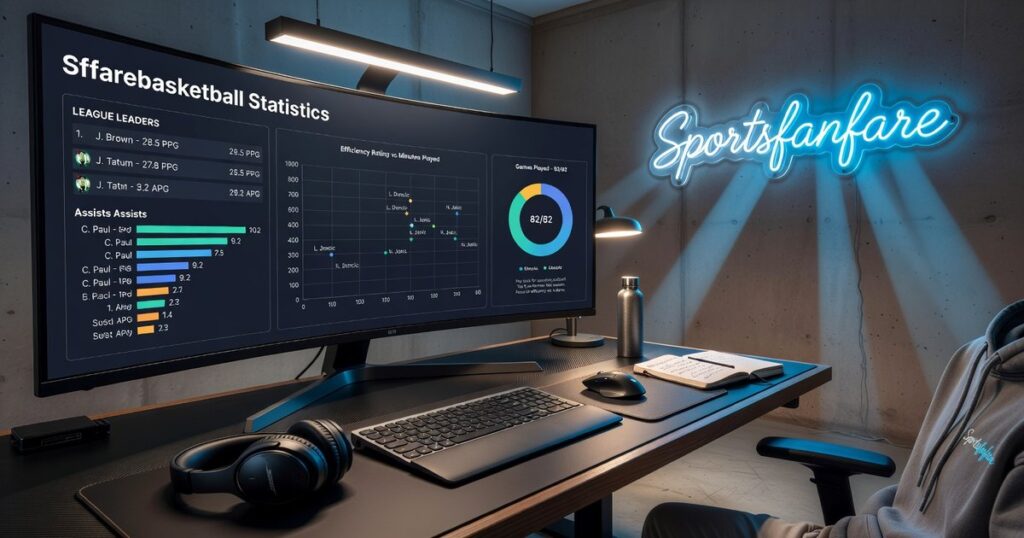
I’ve built stats platforms for years and I know what frustrates fans most.
You pull up a box score and see numbers everywhere. But you don’t know what half of them mean or why they matter.
Here’s the thing: stats tell stories. You just need to know how to read them.
This guide walks you through sffarebasketball statistics by sportsfanfare. I’ll show you where everything lives on the site and what those numbers actually reveal about how players perform and teams win.
We built this platform for people who want more than surface-level stats. You get one of the most complete basketball databases available to fans right now.
I’m going to take you through the site step by step. You’ll learn how to find basic stats like points per game and how to dig into the advanced metrics that separate good analysis from guessing.
By the end, you’ll know exactly where to look and what you’re looking at.
No more staring at numbers wondering what they mean.
Your Quick-Start Guide: Navigating the SportsFanFare Stats Portal
Most stats portals throw everything at you at once.
You land on the page and there’s fifty different buttons, filters that don’t make sense, and data that looks like it was designed by someone who’s never actually watched a game.
I built this differently.
When I created the SportsFanFare stats system, I wanted something you could figure out in under two minutes. No tutorial videos. No help documentation that takes longer to read than it does to just find the stats yourself.
Here’s exactly how to get what you need.
Step 1: Find the Stats Hub
Look at the top navigation bar. You’ll see “Stats” right there. Click it.
That’s your starting point for everything.
Step 2: Pick Your View
Once you’re in, you’ll see three main options. Player Stats, Team Stats, and League Leaders.
Most people start with League Leaders because it’s the fastest way to see who’s doing what right now. But if you’re digging into a specific player or team, those other tabs are where you want to be.
Step 3: Get Specific
This is where most other platforms fall apart. They either give you too many filters or not enough.
I added dropdown menus that actually matter. You can switch between seasons, toggle per-game versus totals, and compare regular season to playoffs. The sffarebasketball statistics by sportsfanfare update in real time, so you’re always looking at current numbers.
Step 4: Go Deeper
See a player or team that catches your eye? Click their name.
You’ll land on a complete profile page with their full statistical breakdown. No extra steps. No hunting around for a link buried somewhere in a sidebar (which is honestly how most sites still do it).
That’s it. Four steps and you’ve got what you need.
Beyond the Box Score: Understanding Core Player Statistics
I still remember the first time I looked at a stat sheet and thought I knew everything.
Points per game. That was it. If a guy scored 25 a night, he was elite. If he scored 10, he was average.
Then I watched a game where the leading scorer went 8 for 28 from the field. His team lost by 15. And I realized I’d been reading stats all wrong.
Now some people will tell you stats don’t matter at all. They say you just need to watch the games and trust your eyes. Basketball is about feel and flow, not numbers on a screen.
I get where they’re coming from. Stats can lie if you don’t know what you’re looking at.
But here’s what that argument misses. The right stats tell you things your eyes can’t catch in real time. They reveal patterns over 82 games that you’d never spot watching highlights. While some may argue that traditional viewing offers a complete picture of a player’s impact, a deeper dive into advanced analytics like Sffarebasketball reveals the subtle nuances and strategic patterns that can only be understood through the lens of comprehensive statistics. In the evolving landscape of sports analytics, understanding the nuances of player performance through advanced metrics is crucial, especially in a realm like Sffarebasketball, where every play can redefine a team’s strategy over an entire season.
You just need to know which numbers actually matter.
Scoring Isn’t Just About Points
Most casual fans stop at PTS. I did too for years.
But when you dig into Field Goal Percentage, the picture changes fast. A player dropping 20 points on 18 shots is very different from one getting 20 on 12 shots.
Three-Point Percentage matters even more now. The math is simple. A guy shooting 40% from three is scoring 1.2 points per attempt. That beats most two-point shooters.
Free Throw Percentage tells you who you want at the line in crunch time (and who the other team will foul on purpose).
The Assist to Turnover Ratio Changes Everything
I watch a lot of point guards who rack up 8 assists a game. Sounds great until you see they’re also coughing up 5 turnovers.
That’s a 1.6 ratio. Not terrible, but not elite.
The best floor generals? They’re sitting at 3:1 or better. Chris Paul built a Hall of Fame career on this number.
When I check sffarebasketball statistics by sportsfanfare, this ratio jumps out immediately. It separates the guys who just pass a lot from the ones who actually control the game.
Defense Shows Up in Steals and Blocks
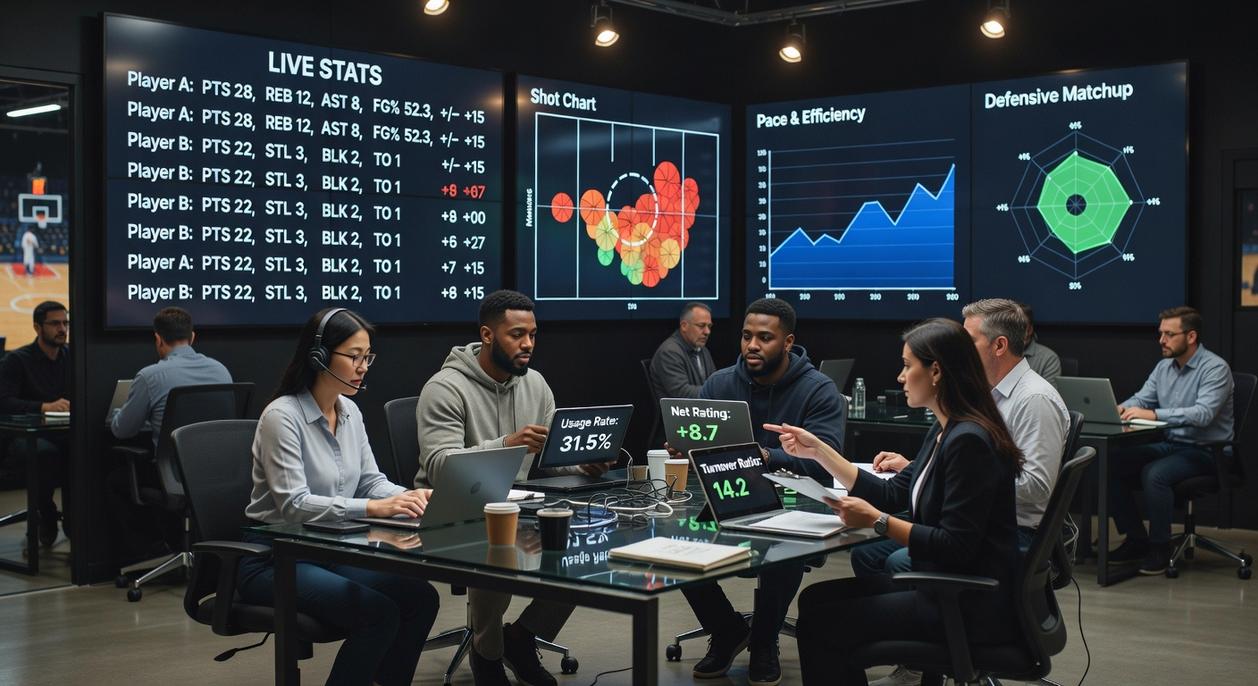
Here’s where box scores get tricky.
A player with 2 steals per game looks active. But steals can be misleading. Some guys gamble too much and give up easy baskets chasing them.
Blocks are cleaner. If you’re swatting 2 shots a night, you’re protecting the rim. Period.
The real value? Finding players who do BOTH. Those are your game changers on defense.
Rebounds Tell You Who Wants It More
Offensive rebounds mean second chances. A guy pulling down 3 OREB per game is giving his team extra possessions every night.
Defensive rebounds are about ending the other team’s possession. Less flashy but just as important.
When you see someone averaging 10 total rebounds with 7 or 8 coming on defense, that’s your anchor. That’s the player keeping opponents to one shot per trip.
Look, you don’t need to become a stats guru overnight.
But once you start reading beyond points, the game opens up. You’ll spot the players who really move the needle before everyone else does.
Go Pro: Interpreting Advanced Analytics on SportsFanFare
Most fans look at points and rebounds and call it a day.
But if you want to understand what’s really happening on the court, you need to dig deeper.
I’m talking about the stats that coaches and front offices actually use. The ones that separate a good player from someone who just looks good in the box score.
Here’s the truth. Basic stats lie to you all the time. A guy can score 25 points and still hurt his team. Another player might grab 10 rebounds but half of them are meaningless.
That’s where sffarebasketball statistics by sportsfanfare come in.
Our platform shows you the numbers that matter. The same metrics that professional analysts spend hours studying. And you can pull them up in seconds.
Let me walk you through the four stats that’ll change how you watch basketball.
Player Efficiency Rating (PER)
Think of PER as the ultimate productivity measure.
It takes everything a player does on the court (scoring, assists, rebounds, steals, blocks) and boils it down to one number. Then it adjusts for pace and minutes played. In the ever-evolving landscape of basketball analytics, the introduction of metrics like Sffarebasketball Rings offers a comprehensive way to evaluate a player’s impact by condensing all their contributions on the court into a single, adjusted figure that reflects their true value. In the ever-evolving landscape of basketball analytics, the introduction of metrics like Sffarebasketball Rings provides a comprehensive evaluation of a player’s overall impact on the game, distilling complex contributions into a single, meaningful figure.
A PER of 15 is league average. Anything above 20 means you’re looking at an All-Star level player. Above 25? That’s MVP territory.
The beauty of PER is simple. It tells you who’s actually making things happen when they’re on the floor, not just who plays the most minutes.
True Shooting Percentage (TS%)
Regular field goal percentage is outdated.
Why? Because it treats a three-pointer the same as a mid-range jumper. It ignores free throws completely (which is insane when you think about it).
TS% fixes all that. It accounts for two-pointers, three-pointers, and free throws in one clean number.
A player shooting 45% from the field might look average. But if he’s taking mostly threes and getting to the line, his TS% could be 58%. That’s actually elite scoring efficiency.
League average TS% hovers around 56%. Anything above 60% means that player is a serious offensive weapon.
Usage Rate (USG%)
Want to know who really runs the offense?
USG% shows you what percentage of team plays end with a specific player when they’re on the court. We’re talking shots, turnovers, trips to the free throw line.
A usage rate around 20% is pretty standard. Get up to 30% and you’re looking at a primary option. Above 35%? That guy is the entire offense.
This stat matters because it gives context to everything else. A player averaging 18 points on 32% usage is way more impressive than someone scoring 22 on 38% usage.
You can see exactly who’s shouldering the load and who’s just along for the ride.
Win Shares (WS)
This one’s my favorite.
Win Shares estimates how many wins a player added to their team’s total. It combines offensive and defensive contributions into one number.
The calculation gets complicated (it factors in points produced, defensive rating, and playing time). But the result is straightforward. Higher Win Shares mean more wins.
A solid starter might rack up 5 to 8 Win Shares in a season. All-Stars typically land between 10 and 15. The best players in the league? They’re pushing 15 to 20 Win Shares.
When you’re looking at our player pages, this number tells you who’s actually moving the needle for their team. Not who gets the most highlights on sffarebasketball matches 2022 recaps.
These four metrics work together.
You might see a player with high usage but low efficiency. That’s a ball hog. Or someone with great TS% but low Win Shares. They’re scoring well but not helping their team win.
The stats tell stories when you know how to read them.
Analyzing Team Performance: A Strategic Overview
Basketball isn’t about one player taking over.
It’s about five guys working together. And if you want to understand which teams actually have their act together, you need to look beyond the box score.
Most fans just check wins and losses. They think that tells the whole story. And sure, winning matters. But two teams with identical records can be miles apart in how they actually play.
That’s where team stats come in.
Offensive and Defensive Rating matter more than almost anything else. These numbers show you how many points a team scores and allows per 100 possessions. Not per game (because pace throws that off) but per possession.
When you pull up sffarebasketball statistics by sportsfanfare, look at these ratings first. A team with a 115 offensive rating and a 108 defensive rating? They’re scoring efficiently but getting torched on defense. You’ll see that pattern play out every single game.
The best teams dominate on one end or both. Find a squad with top-five marks in both categories and you’ve probably found a championship contender.
Pace tells you how teams want to play. Some squads push the ball every possession. Others slow it down and grind through half-court sets. Neither approach is wrong, but it changes everything about how you watch and analyze games. In the ever-evolving landscape of basketball strategy, understanding pace is crucial, especially when analyzing the unique dynamics of Sffarebasketball, where teams may either embrace an up-tempo style or meticulously strategize in the half-court. In the ever-evolving landscape of basketball strategy, understanding pace is crucial for fans and analysts alike, especially as we delve into the nuances of styles like Sffarebasketball, which emphasizes a fast-paced, high-scoring approach that can transform the dynamics of any game.
Check the pace stat to see which teams are running and which ones are walking it up. That context makes the rest of their numbers make sense.
Want to take this deeper? Apply these same tools to Fare League analysis. The metrics work the same way, and you’ll spot patterns most people miss.
From Fan to Analyst: Your Journey with SportsFanFare
You came here looking for how to view basketball statistics on our official website.
Now you have a complete roadmap to not only find the data but to understand the deeper story it tells.
The main challenge for fans is turning raw numbers into real insight. Sffare Basketball statistics by SportsFanFare solves this problem. The platform is both powerful and easy to use.
You’ve gone from simply viewing stats to actively analyzing the game. That’s a big shift in how you watch basketball.
The tools are there. The knowledge is in your hands.
Dive into the SportsFanFare stats portal now and start exploring. Look at player efficiency ratings. Compare team performance across different quarters. See which lineups work and which don’t.
The game will never look the same again. Homepage. Sffarebasketball Rings.
 Founder & Lead Strategist
The visionary behind Sffare, Zyvaris combines deep analytical insights with a lifelong passion for the Fare League to redefine how fans understand the modern game through elite storytelling and tactical precision. His approach involves a meticulous deconstruction of offensive flow and defensive rotations, ensuring that every piece of content published under the Sffare banner provides a masterclass in basketball IQ that empowers both casual viewers and seasoned professionals. Furthermore, he works tirelessly to bridge the gap between historical basketball fundamentals and the modern era's emphasis on high-volume efficiency, creating a unique strategic philosophy that has become the bedrock of the entire Sffare brand.
Founder & Lead Strategist
The visionary behind Sffare, Zyvaris combines deep analytical insights with a lifelong passion for the Fare League to redefine how fans understand the modern game through elite storytelling and tactical precision. His approach involves a meticulous deconstruction of offensive flow and defensive rotations, ensuring that every piece of content published under the Sffare banner provides a masterclass in basketball IQ that empowers both casual viewers and seasoned professionals. Furthermore, he works tirelessly to bridge the gap between historical basketball fundamentals and the modern era's emphasis on high-volume efficiency, creating a unique strategic philosophy that has become the bedrock of the entire Sffare brand.