
Basketball is evolving faster than ever, and staying ahead means understanding more than just the final score. From shifting pro game strategies to emerging team performance trends and deeper Fare League analysis, today’s fans and players are searching for insights that go beyond surface-level commentary. This article breaks down the most pressing topics shaping the game right now — including tactical adjustments, player efficiency trends, and the growing debate around load management in sports.
If you’re looking for clear, actionable analysis rather than recycled headlines, you’re in the right place. We combine detailed game breakdowns, performance data, and proven basketball drills to connect what happens on the court with what it means for teams and athletes moving forward. By studying real-game film, current statistics, and evolving coaching strategies, we deliver practical insights that help you better understand the modern game — whether you’re a serious fan, a competitive player, or someone looking to sharpen your basketball IQ.
Nearly 30% of season-ending injuries in professional basketball are classified as preventable, according to health reports. That’s not bad luck—that’s miscalculation.
Coaches face a tradeoff: push for peak output now or preserve bodies for June. Short-term dominance vs long-term durability.
Our analysis of game film and performance data reveals a divide:
- Reactive model: heavy minutes, minimal recovery, rising late-season breakdowns.
- Proactive model: rotations, monitored workloads, sustained efficiency.
Critics argue that load management in sports softens competitors. But evidence shows smarter distribution boosts availability and playoff impact.
This guide delivers a framework to maximize readiness without sacrificing edge.
Quantifying Fatigue: The Metrics That Actually Matter
Moving Beyond the “Eye Test”
Coaches often rely on the “eye test” — a subjective judgment based on how tired a player looks. The problem? Research shows athletes routinely underreport fatigue, especially in competitive environments (Impellizzeri et al., 2004). In other words, toughness can mask trouble. Objective data, by contrast, provides measurable evidence of strain, helping teams make smarter decisions around load management in sports.
Key External Load Metrics
First, external load refers to the physical work completed. Using GPS tracking, teams monitor total distance covered, high-intensity sprints, and accelerations/decelerations. Why do these matter? Studies in elite soccer found spikes in high-speed running increased soft-tissue injury risk by up to 30% (Gabbett, 2016).
For example, if a guard averages 5,000 meters per session but suddenly logs 6,500 with 25% more sprints, that deviation is a red flag. Accelerations and decelerations are especially taxing because they stress joints and connective tissue (think constant stop-and-go fast breaks).
Essential Internal Load Metrics
Next, internal load measures how the body responds. Heart Rate Variability (HRV) tracks fluctuations between heartbeats; lower HRV often signals poor recovery or elevated stress (Plews et al., 2013). Meanwhile, session Rate of Perceived Exertion (sRPE) multiplies workout intensity by duration to quantify overall strain.
Interestingly, when high external loads pair with suppressed HRV, injury likelihood rises significantly.
Practical Application
A weekly monitoring chart might include:
- Monday: Baseline HRV + moderate distance
- Wednesday: Sprint spike + slight HRV dip
- Friday: Elevated sRPE + continued HRV suppression
Two or more warning signs? That’s your cue to adjust before fatigue turns into missed games.
The Three Pillars of Proactive Recovery
Elite performance isn’t built on workouts alone. It’s built on what happens AFTER the workout. While most programs obsess over reps and schemes, few address recovery with the same intensity. That gap is where real competitive advantage lives.
Pillar 1 – Sleep Optimization
Sleep is the master regulator. During deep sleep, the body releases growth hormone, drives muscle repair, balances cortisol (your primary stress hormone), and consolidates motor learning (Walker, 2017). Miss sleep, and you blunt strength gains, slow reaction time, and increase injury risk (Mah et al., 2011).
Some argue talent and extra practice outweigh sleep. Short term? Maybe. Long term? Fatigue compounds.
Actionable steps:
- Keep a consistent sleep-wake schedule (even on off days).
- Create a cool, dark, tech-free room.
- Wind down 30–60 minutes before bed.
Pro tip: Treat sleep like a training session—schedule it.
Pillar 2 – Performance Nutrition & Hydration
Recovery accelerates when glycogen (stored carbs) is replenished and muscle protein synthesis is stimulated. A simple post-training meal: lean protein (25–40g), fast-digesting carbs (rice, fruit), and electrolytes. Dehydration as small as 2% body weight impairs performance (ACSM).
Hydration strategy: weigh pre/post training and replace 125–150% of fluid lost.
Competitors mention protein shakes. Few discuss TIMING. The 30–90 minute window matters.
Pillar 3 – Active Recovery & De-loading
Low-intensity work increases blood flow without adding fatigue—think mobility circuits, light shooting drills, or foam rolling. It supports load management in sports without full shutdown.
A de-load week reduces volume by 30–50% while maintaining intensity. Fitness stays sharp. The nervous system resets.
Recovery isn’t soft. It’s STRATEGIC.
In-Season vs. Off-Season: Adjusting the Blueprint

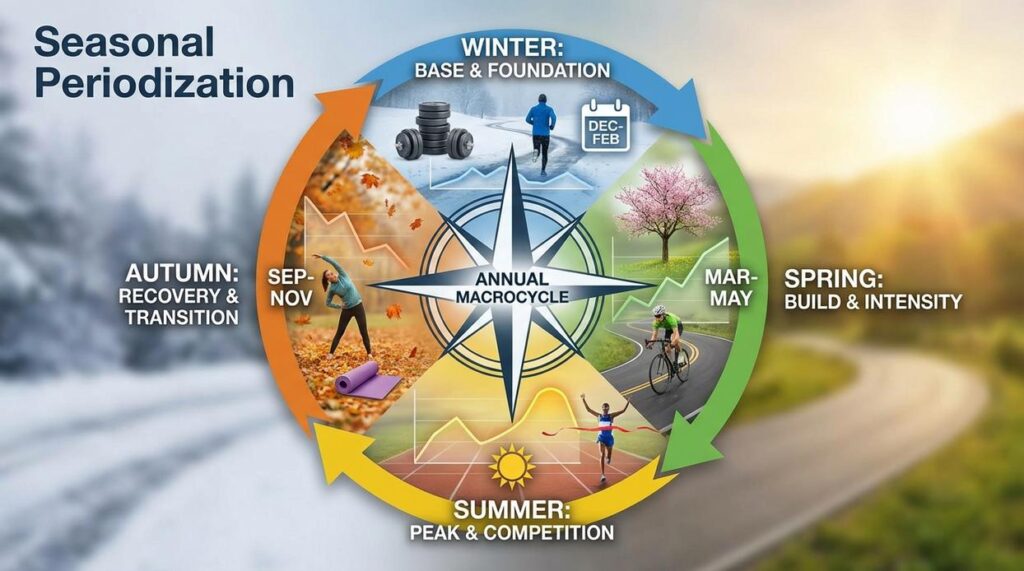
In-Season Management: Maintain and Compete
During the season, the priority shifts to maintenance and readiness. That means preserving performance, not chasing new fitness peaks. In practical terms, shorten practices, increase intensity in controlled bursts, and build structured recovery days into the weekly schedule. For example, instead of a 90-minute grind, run a focused 45-minute session emphasizing situational drills and live reps. Then, immediately follow with mobility work and film study. This approach supports effective load management in sports by balancing stress and recovery (a lesson many NBA teams learned the hard way in the early 2010s).
Off-Season Strategy: Build the Base
Conversely, the off-season is for progressive overload—gradually increasing training demands to stimulate adaptation. Start with general fitness: aerobic conditioning, foundational strength lifts, and movement mechanics. After 4–6 weeks, layer in sport-specific drills like transition shooting and defensive rotations. Think of it like building a house: pour the foundation before adding walls. Pro tip: track volume increases weekly to avoid spikes that raise injury risk (Gabbett, 2016).
The Tapering Period: Arrive Sharp
Finally, taper workloads 7–10 days before major competition. Reduce volume by 30–50% while keeping intensity high (Mujika & Padilla, 2003). The goal? Fresh legs, fast reactions, and peak confidence. For broader performance trends, see womens sports viewership surge what numbers reveal.
The Coach-Athlete Dialogue: Turning Data into Trust
Workload metrics should spark conversation, not suspicion. When a dashboard flags fatigue, treat it as a question mark, not a verdict. Ask athletes what the numbers miss—sleep quality, stress, confidence. Data becomes a bridge.
To build buy-in, explain the why behind load management in sports. Players who see the link between smart planning and peak performance are more honest.
Recommendations:
- Share weekly reports in plain language.
- Invite feedback before adjusting minutes.
- Create individualized recovery plans.
For more on communication, see this guide. Pro tip: revisit goals monthly. Build trust daily.
Building a Resilient Roster for the Long Haul
Ultimately, the goal isn’t to train less—it’s to train smarter. In simple terms, workload means the total physical and mental stress placed on athletes. When unmanaged, one key injury in a playoff run can derail months of preparation (and yes, championships have swung on a single strained hamstring).
So, what makes the difference? A clear, data-informed system.
| Metric | What It Means | Why It Matters |
|—|—|—|
| sRPE | Session Rating of Perceived Exertion | Tracks effort simply and consistently |
| Sleep | Hours and quality | Drives recovery and performance |
In load management in sports, clarity beats guesswork. Start with sRPE and prioritize sleep—then build from there.
Take Control of the Game Plan
You came here to better understand how modern strategies, player rotations, and load management in sports are shaping today’s basketball landscape. Now you’ve seen how smarter minute distribution, tactical adjustments, and performance tracking directly impact wins, player longevity, and long-term team success.
The reality is this: ignoring fatigue, mismanaging rotations, or overlooking strategic trends can cost teams games and derail seasons. That’s the pain point every serious fan, coach, and player wants to avoid.
The good news? You now have the insight to recognize smarter decisions on the court and apply these concepts to your own approach to the game.
If you want deeper breakdowns, advanced strategy analysis, and practical drills that actually translate into results, stay connected and keep learning with us. We’re trusted by serious basketball minds who want clarity—not noise.
Don’t just watch the game. Understand it. Take the next step today and elevate how you see, study, and play basketball.
 Head of Skills & Drills
With a focus on technical mastery, Evanistera develops the specialized basketball drills that help players sharpen their mechanics and dominate Fare League competition through superior muscle memory and specialized court awareness training. Her curriculum is widely recognized for its ability to isolate specific player weaknesses and transform them into elite-level strengths, fostering a generation of athletes who move with purpose, precision, and the relentless drive required to excel at the highest professional tiers. Beyond the physical aspects of the game, she integrates psychological conditioning into her training programs, ensuring that every athlete is mentally prepared to handle the intense pressure and scrutiny of the professional basketball spotlight.
Head of Skills & Drills
With a focus on technical mastery, Evanistera develops the specialized basketball drills that help players sharpen their mechanics and dominate Fare League competition through superior muscle memory and specialized court awareness training. Her curriculum is widely recognized for its ability to isolate specific player weaknesses and transform them into elite-level strengths, fostering a generation of athletes who move with purpose, precision, and the relentless drive required to excel at the highest professional tiers. Beyond the physical aspects of the game, she integrates psychological conditioning into her training programs, ensuring that every athlete is mentally prepared to handle the intense pressure and scrutiny of the professional basketball spotlight.