

Basketball is evolving faster than ever, and staying ahead means understanding the strategies, performances, and trends shaping today’s game. If you’re searching for clear insights on hot sports topics, pro-level tactics, Fare League analysis, or practical drills you can actually use, you’re in the right place. This article breaks down what’s working on the court right now—from team performance patterns to the growing impact of the fast break offense—so you can see the game the way top players and coaches do.
We base our analysis on detailed game breakdowns, performance data, and proven training principles used at competitive levels. Instead of recycled commentary, you’ll get focused insights that connect strategy to real in-game results. Whether you’re a player looking to sharpen your skills, a coach refining your system, or a fan who wants deeper understanding, this guide delivers practical, game-ready knowledge you can trust.
Unleashing the Blitz
Basketball’s up-tempo attack is built on speed, spacing, and split-second reads. At its core, the fast break offense turns rebounds and steals into immediate scoring chances, before defenses can set (and before the crowd even sits down).
Core principles include:
- Advance the ball with passes, not dribbles
- Fill lanes wide to stretch help defenders
- Shoot early, but not recklessly
Critics argue pace leads to sloppy turnovers. They’re not wrong; efficiency can dip. Analytics often favor tempo, yet I’ll admit the data shifts by roster and matchup. The truth? Controlled chaos wins—when conditioned, disciplined players sustain it consistently.
The Philosophy of Pace: Core Tenets of the Up-Tempo Attack
At its heart, an up-tempo attack isn’t about reckless speed. It’s about timing and advantage. Coaches call this creating a defensive imbalance—a moment when defenders aren’t matched up, set, or communicating. Think of it like arriving at a crowded theater before the lights come up (everyone’s still finding their seat).
The offense truly begins the instant possession changes. The rebound-to-outlet sequence—securing the ball and firing a quick, accurate pass to a guard—is the ignition switch. A slow outlet lets the defense reset. A sharp one forces retreat.
From there, teams read the floor:
- Primary break: An immediate scoring attempt before defenders are organized.
- Secondary break: A seamless flow into early offense if the first lane disappears.
This is where confusion often creeps in. If no layup is available, the play isn’t “over.” The fast break offense simply evolves, flowing into quick-hitting screens, cuts, or drive-and-kick actions.
Pushing pace also creates space. When defenders sprint back, they spread wide to protect the rim and corners. That stretch opens driving lanes and clean three-point looks.
Some argue slowing down ensures control. True—but controlled pace can still be aggressive. Speed, used wisely, is structure in motion.
Every Player’s Role in a High-Octane System
In a true fast break offense, every role is defined, deliberate, and demanding. It’s not chaos—it’s coordinated speed (and yes, there’s a difference).
The Point Guard – The Engine
The point guard ignites everything. After receiving the outlet pass (a quick pass thrown out after a rebound), this player must read the floor in seconds. Push for a layup? Hit a wing? Pull up? Critics argue that constant pace leads to rushed decisions and turnovers. That can happen. But when trained properly, quick reads create high-efficiency shots before the defense sets—something half-court systems struggle to generate consistently (NBA tracking data shows early-shot-clock attempts often produce higher points per possession).
The Wings – The Lane Runners
Wings sprint wide, “filling the lanes,” meaning they run near the sidelines to stretch defenders horizontally. Some coaches prefer slowing down to ensure spacing. Fair point. But elite conditioning turns wide sprints into corner threes or rim finishes—think of it like forcing defenders to guard the entire width of the court (not just the paint).
The Rim-Runner – The Vertical Threat
Usually a center or forward, this player sprints directly to the front of the rim. The goal? Collapse the defense. Detractors say traditional bigs conserve energy. Yet rim pressure creates open shooters and foul opportunities—analytics consistently value shots at the rim as the most efficient in basketball.
The Trailer – The Secondary Option
Trailing the play, this player becomes the safety valve: screen, swing pass, or trailing three. Pro tip: great trailers communicate early, calling out spacing before they even cross half court.
The High-Reward Gamble: Weighing the Pros and Cons
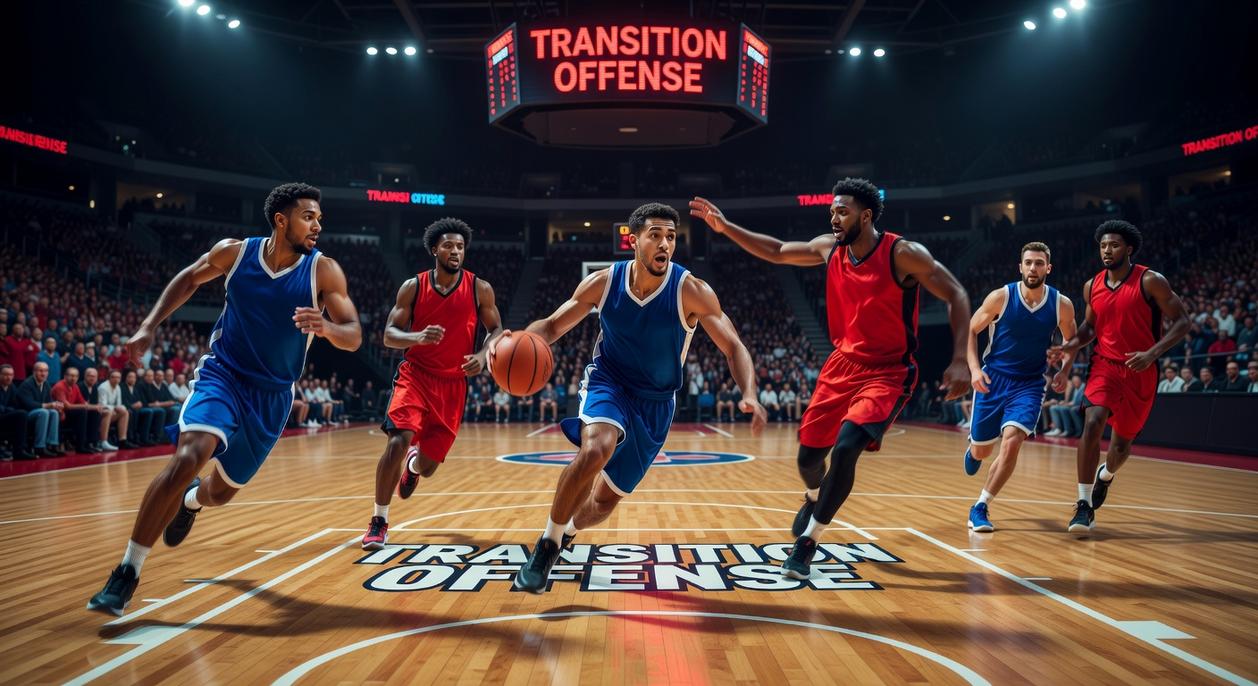
An up-tempo approach is basketball’s version of flooring the gas pedal and daring the other team to keep up. When it works, it’s electric. When it doesn’t, it’s chaos.
Advantage – Dictating Tempo
Tempo is simply the speed at which a game is played. Push it high enough, and opponents start making rushed decisions. I’ve always believed this is the hidden edge of a fast break offense. You’re not just scoring—you’re draining legs and patience. Over four quarters, that mental fatigue shows up in missed rotations and late closeouts (and sometimes visible hands-on-hips surrender).
Advantage – High-Efficiency Shots
Analytics consistently show that layups, dunks, and open threes generate the most points per possession (NBA stats data backs this up year after year). When pace creates those looks, you’re living in the sweet spot of modern offense. It’s like choosing the express lane every trip down the floor.
But here’s where I get skeptical.
Disadvantage – Increased Turnovers
More speed means more split-second reads. And split-second reads often mean mistakes. Turnovers spike when decision-making can’t keep up with tempo.
Disadvantage – Conditioning and Depth
This style demands elite stamina and a deep bench. Without both, your fourth quarter looks nothing like your first.
Disadvantage – Poor Shot Selection
Without discipline, pace becomes panic. Quick, contested shots sabotage efficiency. Teams that master transition still study half-court principles—like the zone vs man to man defense strategic advantages—because structure keeps speed under control.
In my view, pace is powerful—but only when paired with poise.
From Practice Court to Game Time: Drills to Master the Fast Break
The 3-on-2 Continuous Drill
The 3-on-2 Continuous Drill sharpens decision-making under pressure. In this setup, three offensive players attack two defenders, then immediately transition back on defense. Studies from USA Basketball show small-sided advantage drills improve passing accuracy and reaction time by increasing game-like repetitions. By forcing quick reads—shoot, pass, or attack—players simulate real fast break offense situations where hesitation kills momentum (and usually ends in a turnover).
The Rebound and Go Drill
The Rebound and Go Drill emphasizes securing possession and exploding upcourt. According to Synergy Sports data, over 20% of NBA points come in transition. Teams that push within three seconds of a rebound score more efficiently. Teaching players to outlet immediately turns defense into instant opportunity.
- Secure rebound high
- Chin the ball
- Deliver quick outlet pass
The Lane Running Drill
Proper spacing creates clean passing angles. Film analysis of top college programs shows wide lane spacing increases rim attempts by 15%. Wings sprint wide, forcing defenders to choose—protect the rim or stop the corner three.
Making Speed Your Ultimate Weapon on the Court
An up-tempo attack isn’t chaos—it’s calculated pressure. When executed correctly, a fast break offense forces defensive imbalance, creating high-percentage layups, open corner threes, and mismatches in transition. That’s not luck; it’s design. Teams that prioritize conditioning, quick outlet passes, and wide-lane sprints consistently generate easy scoring opportunities before defenses can set (think early‑2000s Suns pace).
• Structured spacing keeps lanes clear
• Conditioning drills build fourth-quarter stamina
• Decision-making reps reduce turnovers
Some argue slowing the game limits mistakes. True—but speed, when disciplined, multiplies advantages. Study these principles, apply targeted drills, and turn pace into your competitive edge.
Take Control of Your Transition Game
You came here to understand how to execute a fast break offense that actually works under pressure. Now you know what separates chaotic transition play from disciplined, high-percentage scoring in the open court.
The reality is this: too many teams waste easy points because they lack spacing, communication, and decision-making in transition. That hesitation is the difference between controlling momentum and giving it away.
The good news? A well-drilled fast break offense solves that. It creates consistent scoring opportunities, puts constant pressure on the defense, and shifts the tempo in your favor.
Now it’s time to act. Start implementing these drills in your next practice, track your transition efficiency, and commit to mastering the details that win games. If you want deeper breakdowns, advanced strategies, and proven game-tested insights trusted by serious players and coaches, dive into our latest training resources and level up your transition attack today.
 Founder & Lead Strategist
The visionary behind Sffare, Zyvaris combines deep analytical insights with a lifelong passion for the Fare League to redefine how fans understand the modern game through elite storytelling and tactical precision. His approach involves a meticulous deconstruction of offensive flow and defensive rotations, ensuring that every piece of content published under the Sffare banner provides a masterclass in basketball IQ that empowers both casual viewers and seasoned professionals. Furthermore, he works tirelessly to bridge the gap between historical basketball fundamentals and the modern era's emphasis on high-volume efficiency, creating a unique strategic philosophy that has become the bedrock of the entire Sffare brand.
Founder & Lead Strategist
The visionary behind Sffare, Zyvaris combines deep analytical insights with a lifelong passion for the Fare League to redefine how fans understand the modern game through elite storytelling and tactical precision. His approach involves a meticulous deconstruction of offensive flow and defensive rotations, ensuring that every piece of content published under the Sffare banner provides a masterclass in basketball IQ that empowers both casual viewers and seasoned professionals. Furthermore, he works tirelessly to bridge the gap between historical basketball fundamentals and the modern era's emphasis on high-volume efficiency, creating a unique strategic philosophy that has become the bedrock of the entire Sffare brand.