
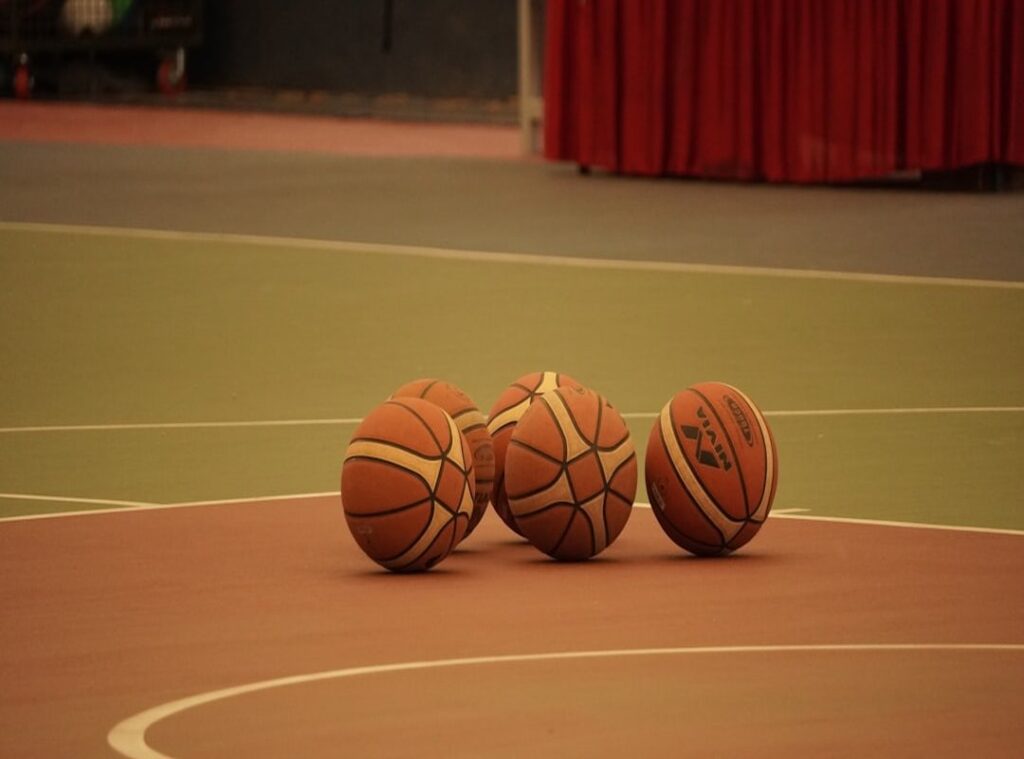
Ever had the ball swiped right from your hands in a key moment? I know the frustration like the back of my hand. I’ve spent years on the court, watching players, from rookies to seasoned pros, grapple with this very issue.
But here’s the thing: real ball control is not about flashy moves, it’s about mastering the basics.
You need a solid foundation, and the right basketball dribbling drills come in. Forget random drills. I’ve seen what works and what doesn’t, and I promise you, this isn’t just another list.
It’s a roadmap.
You’ll get drills that build confidence and game-ready skills (because) having control over the ball means having control over the game. Ready to transform those fumbles into flawless moves? Let’s start.
The Heartbeat of Your Game: Mastering Handles
Ball-handling is more than just putting on a show with fancy moves. It’s the backbone of controlling the game’s tempo and opening doors for scoring, passing, and every other offensive skill. Trust me, when you can command the ball, everything else falls into place.
Think about it: breaking down defenders isn’t just about speed. It’s about precision. When you have great handles, you reduce turnovers because you’re not fumbling around.
Your court vision improves (you’re not staring at the ball), and suddenly, you’re playing chess while everyone else plays checkers.
It’s exhilarating when your confidence on the court skyrockets because when you OWN the ball, you OWN the game. It all starts with mastering the fundamentals.
Dribbling isn’t an afterthought; it’s your foundation. If you’re looking to boost your game further, consider how rebounding drills better performance. They’re as key as nailing those basketball dribbling drills.
But don’t just take my word for it. Hit the court and feel the shift. You’ll see what I mean.
Stationary Drills: The Base of Control
When it comes to building a solid basketball foundation, stationary drills are your bread and butter. These drills are where every player starts, no matter if you’re a rookie or a pro warming up. They are about mastering control and feeling one with the ball.
Power Pounds. This one’s straightforward. Stand with legs slightly bent and dribble the ball hard on the spot, alternating hands. The key is consistency and strength. Why does it work? It builds hand strength and gets you comfortable with the ball’s bounce. Go for 30 seconds on each hand. You’ll feel it in your arms.
Next up, Fingertip Control Taps. Sounds simple, right? Hold the ball above your head and tap it back and forth between your fingertips.
Keep those arms straight. This drill sharpens your touch and control, key for those quick passes and shots. Do it for 30 seconds.
It’s tougher than it looks.
Then there’s Two-Ball Dribbling. This one’s a bit of a brain workout too. Dribble two balls at the same time, bouncing them in sync or alternating.
It’s about coordination and multitasking. Why does it matter? Because games aren’t just about skill; they’re about thinking fast and reacting.
Aim for 45 seconds. It’s a challenge, but that’s the point.
These drills are the backbone of any serious practice. They might seem basic, but they lay the groundwork for more complex moves. Ever wonder why the greats make it look so easy?
It’s because they’ve nailed these fundamentals.
I’ve seen players who skip these basics struggle later. They might have flashy moves, but without a solid base, they crumble under pressure. Trust me, there’s no skipping steps here.
It’s like trying to write without knowing the alphabet. Impossible, right?
Basketball dribbling drills aren’t just about looking good on the court. They’re about building confidence and control. They make sure that when the heat’s on, you don’t lose your cool.
So, dedicate time to them. They’re the roots of your game, and strong roots make for a mighty tree.
Remember, it’s not just the skills. It’s the dedication and practice that set you apart. Are you ready to put in the work?
On the Move: Applying Your Skills in Motion
Let’s take your stationary basketball dribbling drills and kick them up a notch. We’re about to get changing. Static control is great, but bringing that control into movement makes it game-like.

It’s the logical next step. You ever wonder how players seem to glide through defenses? They don’t just stand still and hope for the best.
They practice with purpose.
First up, the Full-Court Zig-Zag Crossovers. Set up cones in a zig-zag pattern across the court. Start at one end, dribble with your right hand to the first cone, crossover to your left hand, and head to the next cone.
Keep your eyes up (not on the ball). This drill is perfect for navigating pressure and tight defenses in the backcourt. Changing pace is key here.
It’s all about deception. Use this move to fake out defenders and drive past them in the game. Remember, those defenders won’t know what hit them if you change speed unexpectedly.
Next, try the In-and-Out Dribble Attack. Place cones in a straight line with space between them. Dribble in and out of the cones, switching hands as you go.
How about the Retreat Dribble to Hesitation? Set up a couple of cones about 10 feet apart. Dribble up to the first cone, then retreat dribble back to create space (a lifesaver when you’re getting trapped).
Once you’ve retreated, hesitate as if you’re going to shoot or pass, then blow past the cone. This is your go-to move when defenders are closing in fast, and you need a quick exit plan.
These drills aren’t just about movement; they’re about awareness. Keep those eyes up and stay unpredictable. And if you’re looking for more training ideas, dive into some fun team passing drills coordination.
Mixing up your practice keeps you sharp and ready.
Why stick with the basics when you can make your training sessions as intense and exciting as the games themselves? Drills like these raise your play. They teach you to react, adjust, and outsmart the defense.
In basketball, it’s all about staying ahead of the game. So, get moving, change those paces, and watch how you evolve on the court.
Dribbling Mistakes You Must Fix Now
So, you’re trying to improve your dribbling. Great start! But let’s not waste time on mistakes that slow you down.
Here’s some insider advice to speed up your game.
The Head-Down Dribbler
Ever notice how some players stare at the ball while dribbling? That’s the head-down dribbler. It’s a problem because you can’t see the court (or the open teammate).
Try this: practice dribbling while watching TV. It sounds silly, but it trains you to rely on feel, not sight.
The Palm Slapper
Slapping the ball with your palm? Rookie move. Use your fingertips for better control.
A simple drill: dribble low and fast, keeping the ball close to your body. Fingertips only.
The Predictable Pace
Always dribbling at the same speed? Defenders love that. Mix it up.
Start with a slow dribble, then explode with speed. Remember, the goal is to keep them guessing. These basketball dribbling drills will transform your game.
Build Your Handle, Control Your Game
You’ve got the roadmap now. No more guessing. Frustration from unreliable handles?
It’s over. You’ve seen how a progressive system can change the game. By mastering fundamentals, you build consistency.
That’s why it works. I know you’re itching to start. So stop waiting. Basketball dribbling drills are your next step.
Grab that ball. Pick a stationary drill. Dedicate just 10 minutes right now.
Seriously, the clock’s ticking. You’re not just reading anymore. This is your move.
Your journey isn’t tomorrow. It’s today. Take control.
Master the handle. Your court. Your rules.
Start now.
 There is a specific skill involved in explaining something clearly — one that is completely separate from actually knowing the subject. Evanistera Butler has both. They has spent years working with team performance breakdowns in a hands-on capacity, and an equal amount of time figuring out how to translate that experience into writing that people with different backgrounds can actually absorb and use.
Evanistera tends to approach complex subjects — Team Performance Breakdowns, Insider Knowledge, Hot Topics in Sports being good examples — by starting with what the reader already knows, then building outward from there rather than dropping them in the deep end. It sounds like a small thing. In practice it makes a significant difference in whether someone finishes the article or abandons it halfway through. They is also good at knowing when to stop — a surprisingly underrated skill. Some writers bury useful information under so many caveats and qualifications that the point disappears. Evanistera knows where the point is and gets there without too many detours.
The practical effect of all this is that people who read Evanistera's work tend to come away actually capable of doing something with it. Not just vaguely informed — actually capable. For a writer working in team performance breakdowns, that is probably the best possible outcome, and it's the standard Evanistera holds they's own work to.
There is a specific skill involved in explaining something clearly — one that is completely separate from actually knowing the subject. Evanistera Butler has both. They has spent years working with team performance breakdowns in a hands-on capacity, and an equal amount of time figuring out how to translate that experience into writing that people with different backgrounds can actually absorb and use.
Evanistera tends to approach complex subjects — Team Performance Breakdowns, Insider Knowledge, Hot Topics in Sports being good examples — by starting with what the reader already knows, then building outward from there rather than dropping them in the deep end. It sounds like a small thing. In practice it makes a significant difference in whether someone finishes the article or abandons it halfway through. They is also good at knowing when to stop — a surprisingly underrated skill. Some writers bury useful information under so many caveats and qualifications that the point disappears. Evanistera knows where the point is and gets there without too many detours.
The practical effect of all this is that people who read Evanistera's work tend to come away actually capable of doing something with it. Not just vaguely informed — actually capable. For a writer working in team performance breakdowns, that is probably the best possible outcome, and it's the standard Evanistera holds they's own work to.